
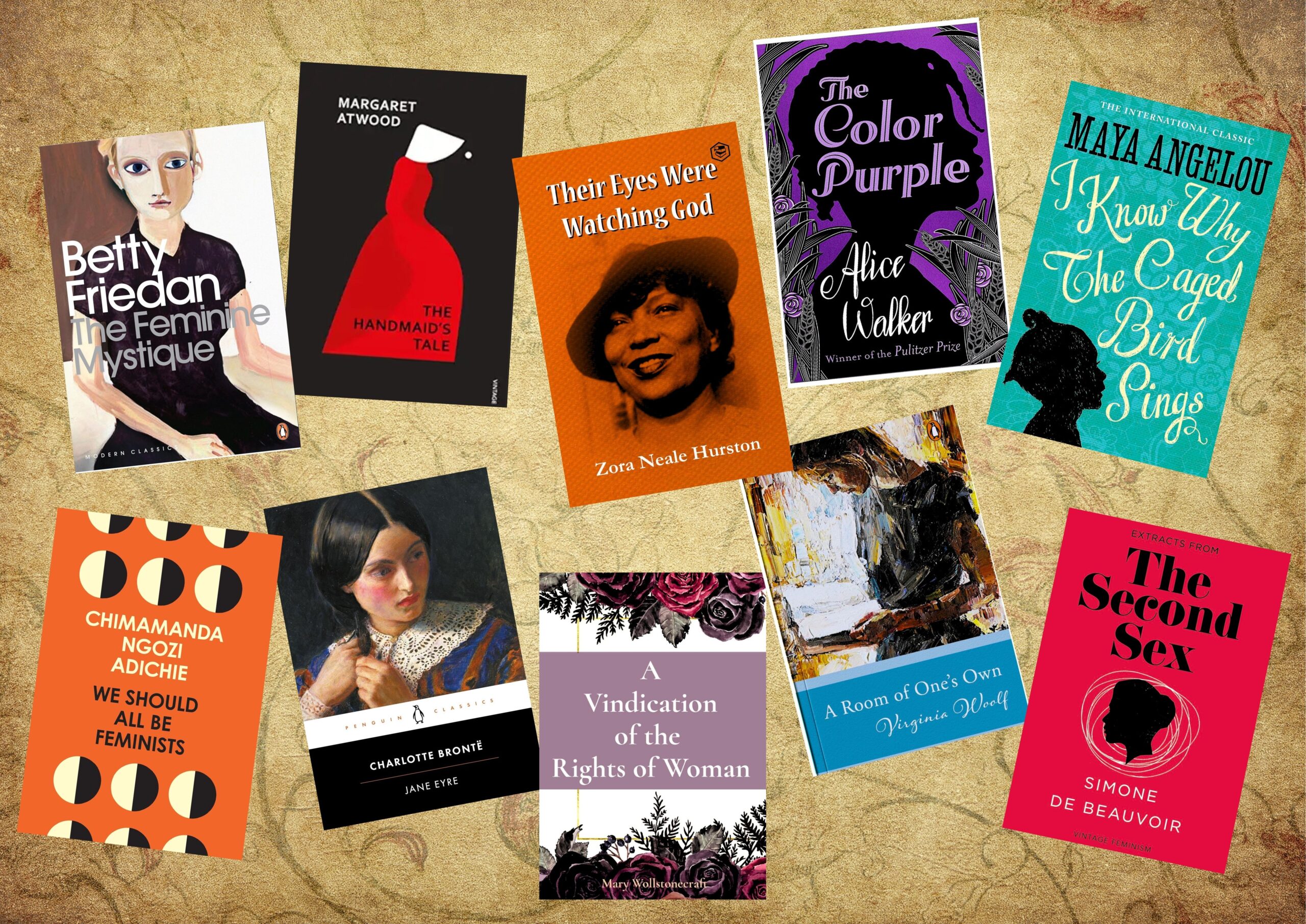
10 Feminist Books Every Woman Should Read
There’s something special about reading a book that seems to understand you before you even understand yourself. Feminist classics have that kind of power. They challenge, comfort, provoke, and sometimes unsettle you, but they always make you think more deeply about the world and your place in it.
Whether you’re completely new to feminist literature or revisiting with a fresh perspective, here are ten timeless books that still speak to readers of all ages.
- Jane Eyre by Charlotte Brontë
Charlotte Brontë wrote Jane Eyre at a time when women authors were dismissed as trivial, often forced to hide behind male pseudonyms just to be taken seriously. Publishing as “Currer Bell,” she entered a literary world that wasn’t built to welcome her voice. And yet, she didn’t soften it. What she created instead was radical.
Jane is no typical Victorian heroine. Despite being poor and powerless, she refuses submission and chooses self-respect over security. Her quiet defiance was radical then and still feels strikingly modern. Even today, Jane Eyre captivates not just as a romance but for its emotional honesty. It’s the kind of book that reminds you that self-worth is not something the world hands you. It’s something you hold onto, even when it would be easier to let go.
- A Vindication of the Rights of Woman by Mary Wollstonecraft
In a time when women were seen as naturally inferior, Mary Wollstonecraft dared to argue the opposite, that they only appeared so because they were denied education. Writing in the 18th century, when women were expected to be agreeable rather than intellectual, Wollstonecraft faced intense criticism for both her ideas and her personal life. She was dismissed, scandalised, and often reduced to gossip rather than taken seriously. Yet she wrote with striking clarity and conviction. Even today, A Vindication of the Rights of Woman remains a compelling read, not just for its arguments, but for its fearless insistence that women deserve to think, learn, and be heard.
- A Room of One’s Own by Virginia Woolf
Virginia Woolf grew up in a literary world she could observe but not fully enter. She was denied formal education while her brothers were allowed to study freely. She battled personal loss and mental health struggles, all while trying to carve out space for herself in a male-dominated intellectual circle that rarely took women seriously.
In A Room of One’s Own, she transforms that exclusion into insight, showing how lack of money, space, and opportunity kept women from creating. Even today, the essay feels sharp and deeply engaging, not just as an argument, but as a quiet, powerful reflection on who gets to tell their story and why.
- The Second Sex by Simone de Beauvoir
Simone de Beauvoir lived in a world that celebrated male intellect while constantly questioning women who dared to think beyond prescribed roles. As a woman in mid-20th-century France, she faced criticism not just for her ideas but for her independence and unconventional life, often judged more for who she was than what she wrote.
In The Second Sex, she responds with an unflinching, deeply layered examination of what it means to be a woman, drawing from history, biology, psychology, and lived experience. She dismantles the idea of womanhood as something natural or fixed, showing instead how it is shaped and imposed. Even today, the book remains gripping, not just for its intellectual depth, but for the way it makes you pause and rethink assumptions you didn’t even realise you held.
- I Know Why the Caged Bird Sings by Maya Angelou
Maya Angelou grew up facing racism, trauma, and a childhood so painful that it led her into years of silence. For a long time, she stopped speaking altogether, absorbing the world quietly until she slowly found her voice again through books and self-expression. In a society that marginalised Black women, choosing to speak at all was an act of strength.
In I Know Why the Caged Bird Sings, she lays her life bare with honesty and quiet power, tracing her journey from silence to self-expression. It pulls you into her world so intimately that you begin to feel every moment of confusion, pain, and growth alongside her. You should read it for its courage, for the way it turns vulnerability into strength, and for how deeply it reminds you of the power of finding and owning your voice.
- The Color Purple by Alice Walker
Alice Walker grew up as the eighth child of sharecroppers, in a world shaped by poverty, storytelling, and quiet endurance. A childhood accident left her blind in one eye, and her mother, instead of letting that limit her, gave her a typewriter, nudging her towards writing. Listening to the layered, often contradictory lives of people around her, Walker became deeply interested in how pain, love, and redemption coexist.
In The Color Purple, she brings that understanding to life through Celie’s journey, told in raw, intimate letters. You should read it for the way it captures survival without romanticising it, for its exploration of sisterhood, healing, and self-discovery, and for how it shows that even the most silenced voices can find their way back to strength and dignity.
- Their Eyes Were Watching God by Zora Neale Hurston
Zora Neale Hurston grew up in Eatonville, one of the first all-Black towns in the United States, where she was surrounded by stories, folklore, and a strong sense of community. Trained as an anthropologist, she preserved Black oral traditions in her work, but during her lifetime, she was criticised, fell out of favour, and died in relative obscurity before her writing was rediscovered years later.
In Their Eyes Were Watching God, she brings that rich cultural voice into Janie’s story, a journey through love, loss, and self-realisation. The novel draws you in with its language and emotional depth, offering a deeply personal exploration of what it means to find your voice and live life on your own terms.
- The Handmaid’s Tale by Margaret Atwood
Margaret Atwood grew up surrounded by books and ideas, eventually becoming one of the sharpest and most observant literary voices of her time. Writing during a period of political shifts and rising anxieties around women’s rights, she paid close attention to history, noticing how easily freedoms could be taken away, often under the guise of order and control.
In The Handmaid’s Tale, she builds a chilling world where women are stripped of their rights and reduced to their biological roles. What makes the novel so gripping is how real it feels; every rule, every restriction has echoes in history. It’s a powerful, unsettling read that stays with you, making you question how fragile freedom can really be.
- The Feminine Mystique by Betty Friedan
Betty Friedan began her career as a journalist. It was her own life that shaped her most influential work. At a time when women were told that fulfilment lay solely in marriage and motherhood, she noticed a widespread unhappiness that no one was openly discussing. Speaking about it invited criticism, but she chose to give it a voice.
In The Feminine Mystique, she names this feeling “the problem that has no name,” exposing the gap between societal expectations and personal fulfilment. The book draws you in with its clarity and relevance, making you reflect on how deeply these expectations are ingrained and why questioning them still matters.
- We Should All Be Feminists by Chimamanda Ngozi Adichie
Chimamanda Ngozi Adichie grew up in Nigeria, navigating cultures and expectations that often treated men and women differently in subtle but lasting ways. As she moved between Nigeria and the West, she became increasingly aware of how deeply gender bias is woven into everyday life, not always loudly, but persistently. Speaking about it openly brought both praise and criticism, but she continued to tell these stories with clarity and conviction.
In We Should All Be Feminists, she distils these experiences into a sharp, engaging essay that feels personal and relatable. It’s an easy yet impactful read, one that makes you notice the small, everyday inequalities you might otherwise overlook, and gently pushes you to think differently about them.
No list can cover everything, and feminist reading keeps growing. If you want more, try The Yellow Wallpaper by Charlotte Perkins Gilman—a chilling, symbolic story about autonomy, mental health, and how women are quietly controlled. There’s also The Bell Jar, where Plath shows the heavy expectations placed on women. It’s intimate, raw, and still feels relatable today. For modern takes, books like Bad Feminist by Roxane Gay keep the conversation going in voices that feel close to our own time.
Feminist literature isn’t just about theory or activism. It’s about feeling seen. It’s about questioning the rules and, sometimes, quietly changing them.
Pick up one of these books, find a quiet spot, and let it speak to you. It might just change how you see the world.