If Classic Authors Had Instagram: Imagining Stalwarts of Literature in the Social Media Age
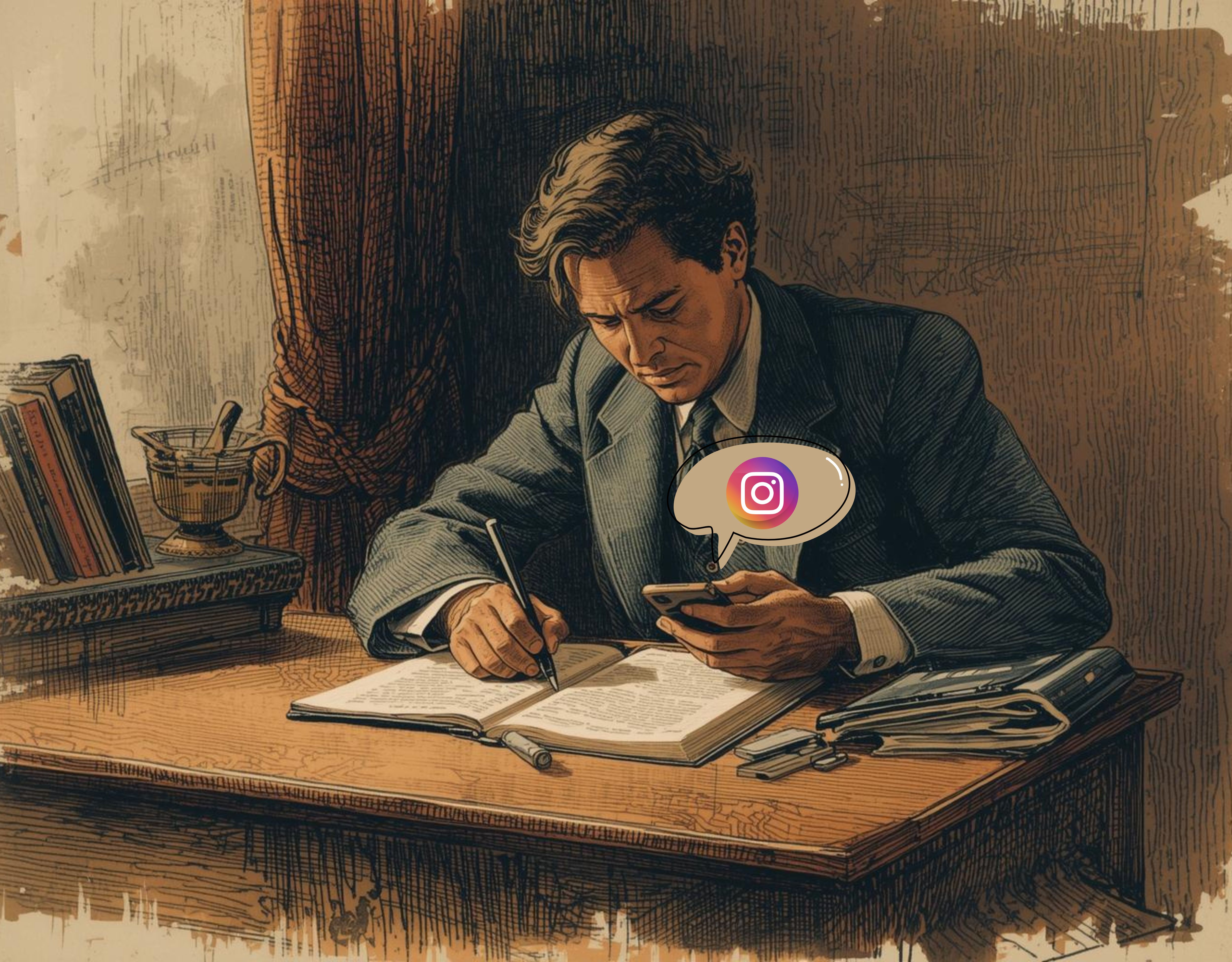
Imagine if Jane Austen had an Instagram account. Would she be posting witticisms about Regency-era courtship with #MannersAndMarriage? Or if Shakespeare were online, would his “To be or not to be” soliloquy go viral as a Reel? In a world where every thought, meal and mood is broadcast through curated squares, it’s hard not to wonder how the great literary masters would navigate the vibrant chaos of social media.
Let’s take a playful peek into the past—through the lens of today’s digital present.
- Jane Austen: The Queen of Subtle Sass: Austen’s feed would be a masterclass in genteel aesthetics—tea sets, lace gloves, and countryside picnics with captions dripping in irony. Each post might read like a perfectly balanced line from Pride and Prejudice: elegant, biting and relatable. Her DMs would likely be filled with admirers seeking advice on relationships, etiquette and the fine art of saying everything without saying too much.
Bio: “Observing society since 1775. Opinions are universal, manners optional.”
Hashtags: #RegencyRealness #SocialSatire #AustenVibes
2. William Shakespeare: The Original Influencer: If any author could dominate Instagram, it would be the Bard. Shakespeare’s captions would be poetic puzzles; his videos, full of dramatic flair. His Stories might include behind-the-scenes clips from The Globe Theatre, while his feed would alternate between moody monologues and selfies captioned “All the world’s a stage.”
He’d collaborate with actors, musicians and probably coin viral hashtags like #ThouArtGoals or #MuchAdoAboutEverything.
Bio: “Inventor of words and worlds. Still writing for likes.”
Hashtags: #Shakespiration #DramaKing #QuillAndChill
3. Charles Dickens: The Voice of the People: Dickens’ Instagram would be pure social commentary. Expect photos of Victorian London streets, posts highlighting injustices and powerful captions urging reform. Between posts about orphans, debtors’ prisons and Christmas cheer, he’d probably go live to read a chapter from Oliver Twist while encouraging followers to donate to charity.
His feed would be heartfelt yet visually compelling—a 19th-century human rights campaign gone viral.
Bio: “Stories with soul. Advocate for the unseen.”
Hashtags: #EveryChildMatters #BleakButBeautiful #DickensianDrama
4. Virginia Woolf: The Aesthetic Visionary: Woolf’s grid would be ethereal—soft lighting, seaside reflections and minimalist captions like, “The mind is the most private Instagram.” Her posts would blur reality and introspection, inviting followers into quiet, introspective conversations about identity, art and solitude.
She’d be the poet of the feed, the writer whose posts stop your scrolling and make you think.
Bio: “Finding the self between words and waves.”
Hashtags: #StreamOfConsciousness #WoolfWisdom #MomentsOfBeing
5. Mark Twain: The Master of Sarcasm: Twain’s Instagram would be hilarious, opinionated and unapologetically human. Expect satirical takes on everything from politics to publishing, with memes that could give any influencer a run for their money. His captions would bite, his comments would sting and his engagement would be off the charts.
Twain might even use his platform to encourage aspiring writers to publish and print your book—because, after all, he knew the value of owning your words and telling your story in your own voice.
Bio: “Humourist. Humanist. Occasional troublemaker.”
Hashtags: #TruthInSarcasm #TwainSays #RiverOfWords
6. Emily Dickinson: The Mysterious Minimalist: Dickinson’s account would be private, obviously. She’d post rarely, but when she did, her short, enigmatic verses would flood the internet with interpretations and admiration. Her captions would be cryptic—just enough to make readers lean in closer.
Bio: “I dwell in possibility.”
Hashtags: #QuietRebellion #WhiteDressAesthetic #PoetryOfSolitude
In the End: Likes, Followers and Legacy: If these literary legends had Instagram, their follower counts would rival celebrities. Yet, what truly made their words timeless wasn’t popularity—it was authenticity. Their writing came from a place of curiosity, empathy and deep reflection, not algorithms or filters.
So, perhaps the lesson they’d leave us with is this: while platforms change, storytelling doesn’t. Whether through ink or pixels, writers still seek connection, understanding and truth.
And if you’ve ever dreamt of sharing your voice with the world, take inspiration from these timeless creators. Go ahead—publish and print your book. The world might just need your story next.